


Gardens and Climate Change: Designing Sustainable Landscapes for the Future
August 3, 2026
The garden in the age of climate change
Climate change is no longer a distant issue when it comes to landscape design. Higher temperatures, irregular rainfall, longer summers and water scarcity directly affect plant health, lawn quality and the maintenance of outdoor spaces. For this reason, designing a garden means considering from the very beginning the climate, exposure, soil, water availability and the ability of the landscape to evolve over time. A well-designed garden should not rely on a fragile balance. It must be designed to withstand, adapt and maintain its own harmony even under more complex environmental conditions.Beyond the traditional lawn
The traditional lawn is often associated with the idea of order, elegance and care. However, it is not always the most suitable choice. In some contexts, especially when sun exposure is very intense or water availability is limited, maintaining a green and uniform lawn can require high water consumption and constant maintenance. This does not mean eliminating the lawn in every situation, but rather carefully assessing its actual suitability for the location. In some cases, alternative solutions such as dry gardens, rustic lawns, ground covers, ornamental grasses, gravel, natural stone and drought-resistant plants can offer a more balanced, elegant and long-lasting result. The best choice is always the one that best suits the context.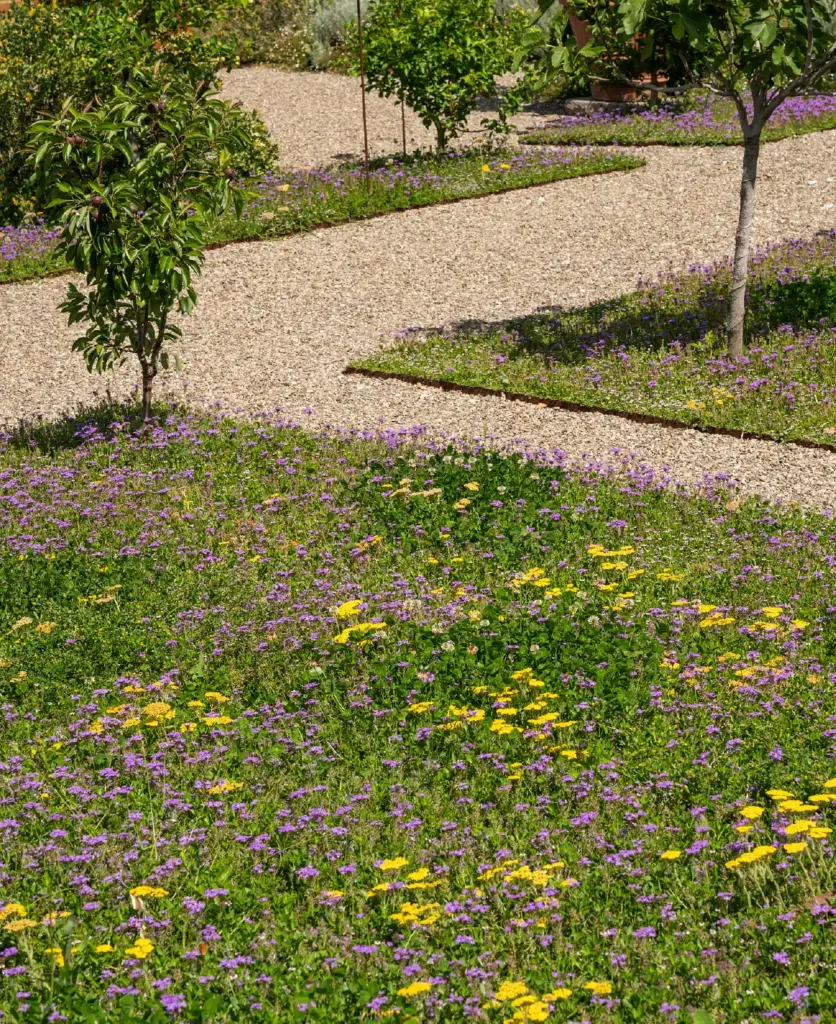
What does it mean to design a resilient garden
A resilient garden is a space capable of better facing heat, water scarcity and environmental stresses. This result comes from many design choices: plant selection, the arrangement of shaded areas, irrigation management, the use of permeable materials, soil quality and the ability to reduce waste. Plants should be chosen not only for their aesthetic value, but also for their ability to adapt to the climate and the place where they will be introduced. Likewise, every area of the garden should be designed considering its future use and the level of maintenance that can be provided. A resilient garden is not a poor garden. It is a smart garden.Dry gardens and low-water-demand landscapes
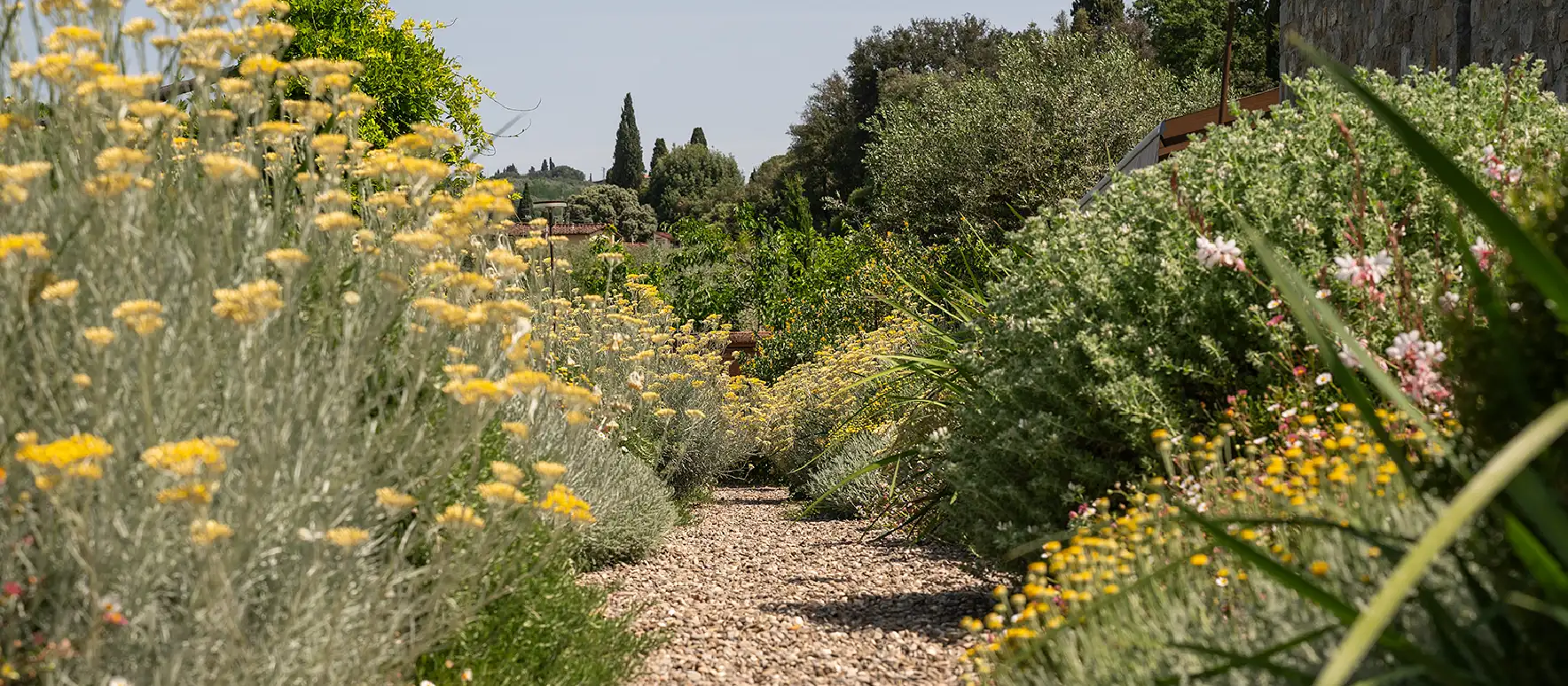
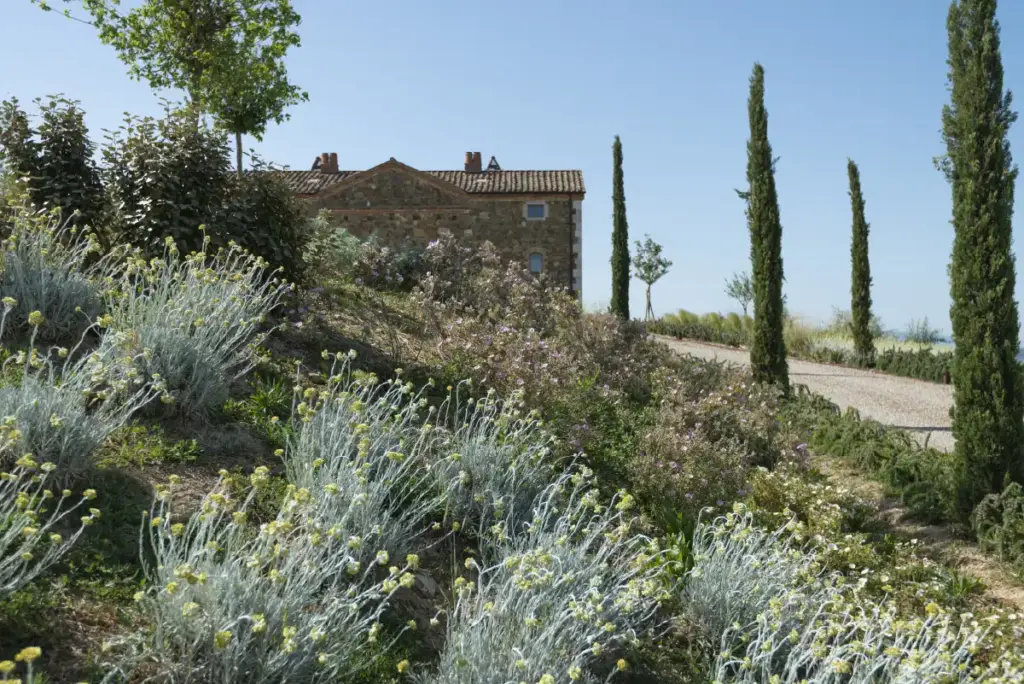
The dry garden is an increasingly relevant solution in environments exposed to heat and drought. It is not simply about replacing the lawn with gravel or drought-resistant plants. A well-designed dry garden requires balance, botanical knowledge and compositional sensitivity. It must combine volumes, textures, blooms, materials and pathways in a harmonious way. Mediterranean plants, grasses, aromatic plants, resilient shrubs and natural materials can create rich, vibrant and refined spaces, capable of changing throughout the year without requiring excessive water consumption. A dry garden is not a choice of giving something up; it is a design choice.The role of shade and materials
In a garden designed to withstand increasingly hot summers, shade becomes a fundamental element. Trees, pergolas, hedges and plant structures help make outdoor spaces more livable, protect relaxation areas and improve the comfort of those who experience the garden. Shade does not only have a practical function, but also contributes to creating depth, atmosphere and quality within the space. Materials also play an important role. Overly dark or impermeable surfaces retain heat and make the garden less comfortable. On the other hand, natural, light-coloured, permeable materials that are consistent with the surrounding context can help maintain greater thermal and visual balance. Every choice, even the seemingly simplest one, affects the way the garden will evolve and live over time.Water, maintenance and responsibility
Water management is one of the central aspects of contemporary landscape design. A well-designed garden must avoid waste and use water responsibly. This means choosing suitable irrigation systems, considering the actual needs of plants, improving the soil’s ability to retain moisture and designing spaces that do not depend on continuous interventions to maintain their quality. Maintenance must also be considered from the very beginning. A garden that is too complex to manage risks losing its coherence over time. Good design also means imagining how that space will be cared for over the years, what resources will be available and which choices can ensure a lasting balance.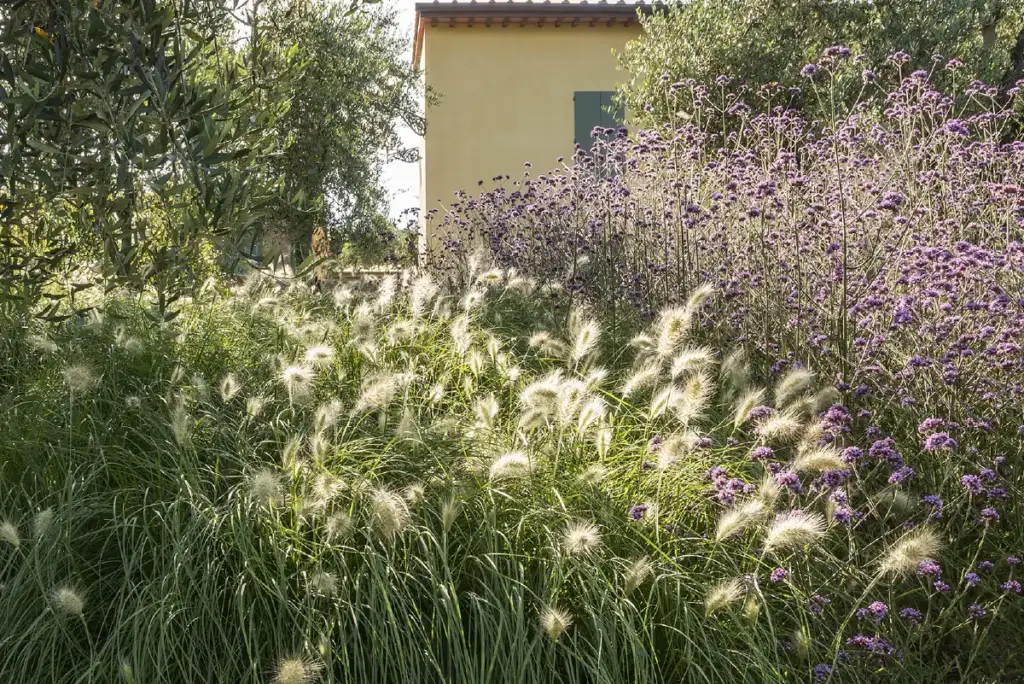
Beauty and sustainability can coexist
A sustainable garden does not necessarily have to be minimal, dry or lacking in aesthetic value. On the contrary, the search for more resilient solutions can create high-quality landscapes: gardens rich in textures, contrasts, scents, seasonal blooms and deep connections with their surroundings. Beauty does not come from an abundance of elements, but from the coherence of the choices made. A carefully designed landscape can be elegant, welcoming and, at the same time, better equipped to face a changing climate.Resilient garden design in Tuscany: the Dimensione Verde approach
For Dimensione Verde, designing a garden means thinking about it over time. Every project begins with observing the place, understanding plants and recognising that the landscape must be beautiful, but also capable of living, adapting and enduring. In an increasingly complex climate context, landscape design requires careful choices: plants suited to the territory, responsible water management, appropriate materials, shade, care and planned maintenance. Whether it is a private garden, a hospitality facility, a historic residence or a prestigious space, the goal is to create authentic, balanced landscapes that can belong to the place even over time. A resilient garden does not give up on beauty. It makes it more conscious.Frequently asked questions
How do you design a drought-resistant garden?
It starts with analysing the location: exposure, soil, climate, water availability and the use of the space. From there, plants, materials and irrigation solutions that are consistent with the context are selected.
Is a lawn always discouraged in case of drought?
No, a lawn can be suitable in some contexts, but it must be carefully assessed. In areas with high sun exposure or limited water availability, alternative solutions may prove to be more sustainable and long-lasting.
What is a dry garden?
A dry garden is a garden designed with plants and materials capable of thriving with low water requirements. It is not merely a technical solution, but a true design approach to the landscape.
Can a drought-resistant garden be elegant?
Yes, with careful design, resilient plants, natural materials, seasonal blooms and proper proportions, it is possible to create refined, welcoming gardens that are consistent with their surroundings.