


Garden Lighting: Complete Guide to Transform Any Green Space
April 16, 2026
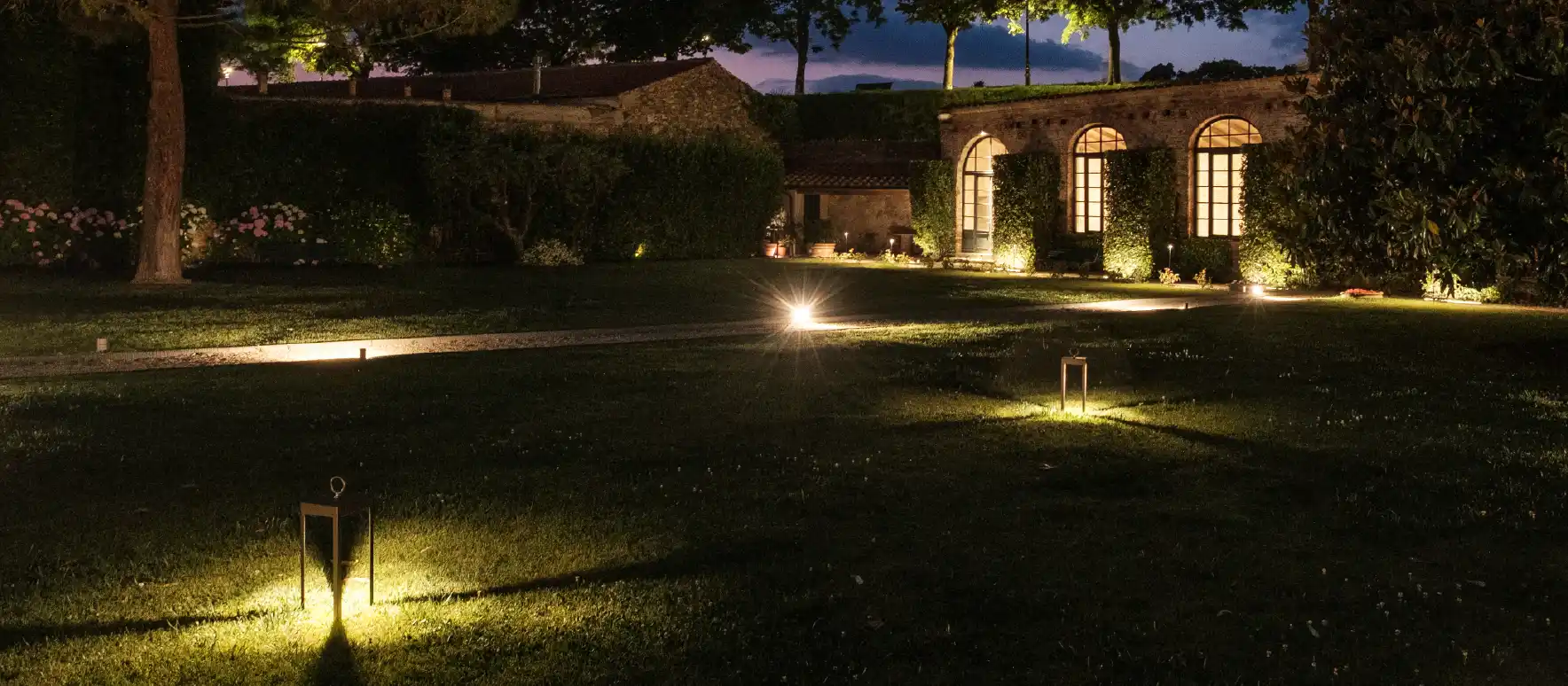
A well-kept garden during the day deserves to be enjoyed in the evening as well. Garden lighting is one of the most underrated elements in outdoor space design, yet just a few lighting fixtures positioned correctly are enough to completely transform the atmosphere of a green area. It’s not just about aesthetics: properly lighting the garden means improving safety, guiding movement between different zones, and extending the usability of the spaces during nighttime hours.
Whether you want to create high-impact effects or simply find your way without tripping, this guide provides everything you need to choose the right solutions, plan an efficient system, and achieve professional results — even starting from scratch.
Why Garden Lighting Makes a Difference
Often, outdoor lighting is thought of as a secondary detail to be sorted out at the end of the work. In reality, light is as much an integral part of a garden project as the choice of plants or materials. Accurate lighting design enhances shapes, creates visual depth, and makes paths and steps safe.
A well-lit garden is not the brightest one: it is the one where light is distributed intelligently, respecting the shadow zones and highlighting only the elements that deserve it. This balance between light and dark is the true key to an effective and high-quality nighttime scenography.
Scenographic Garden Lighting
Scenographic garden lighting is based on professional techniques that enhance every element of the greenery with high-impact visual effects. The most common is uplighting: spotlights are placed on the ground and pointed upwards to highlight trees, hedges, or architectural elements. The effect is dramatic, especially on species with particularly characteristic trunks or canopies.
Downlighting, on the other hand, replicates the moonlight effect: lights are fixed high up — on branches, pergolas, or structures — and project light downwards in a natural and diffused way. Other scenographic techniques include grazing (side-lighting on surfaces to enhance texture), backlighting (to create silhouettes), and washing (uniform lighting on large surfaces). Combining these techniques mindfully distinguishes a professionally lit garden from an ordinary one.
Modern Garden Lighting
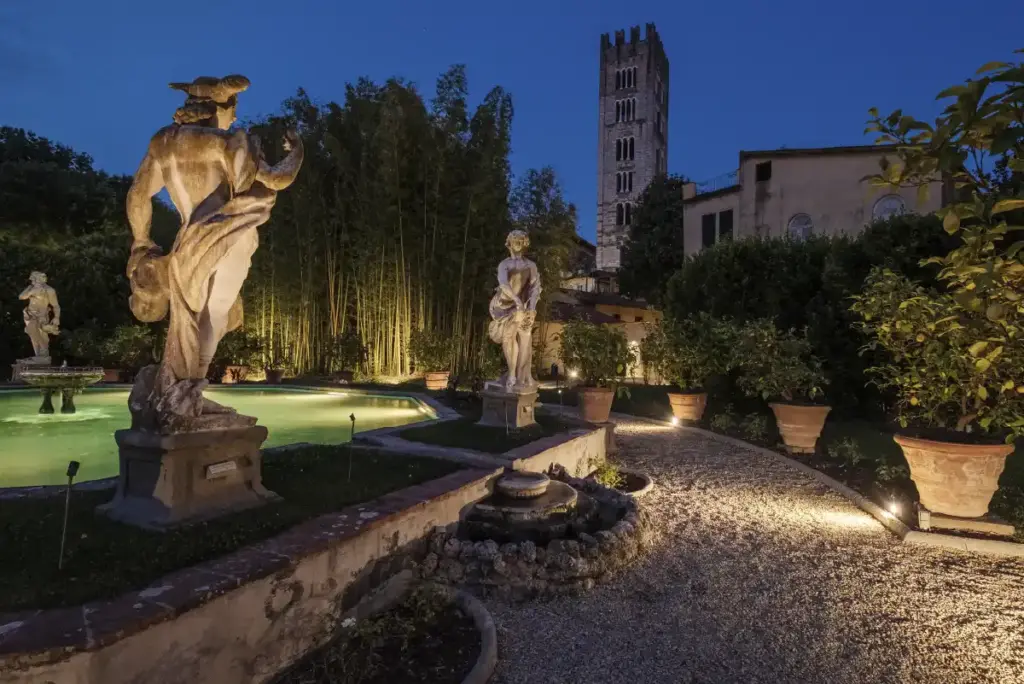
In contemporary design gardens, light is part of the aesthetic language of the entire project. Modern garden lighting favors lighting fixtures with essential shapes, integrated into the paving, planters, or architectural structures in an almost invisible way. By day, they disappear into the environment; by night, they become the protagonists.
The most popular solutions include recessed floor-flush spotlights, linear LED profiles integrated into low walls and steps, and slim light bollards with geometric designs. The preferred color temperature is neutral or cool (3000–4000K), in line with the concrete, steel, and glass surfaces typical of contemporary gardens. Smart garden lighting systems complete the picture, allowing for remote management via apps or voice assistants.
Solar Lighting for Gardens
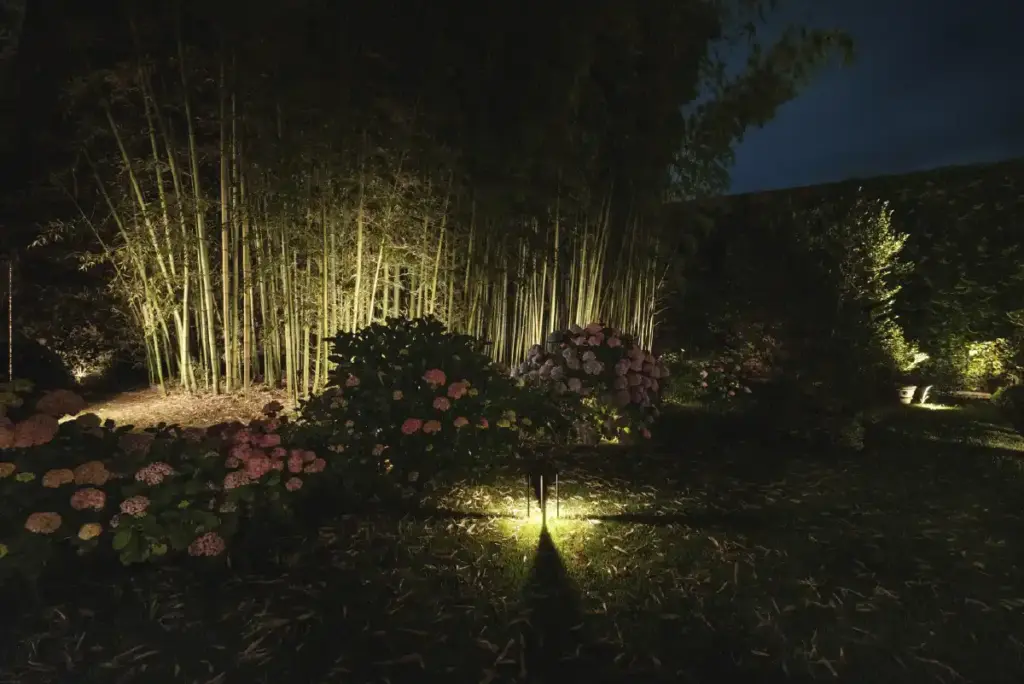
Solar garden lighting is the ideal choice for those who want a functional system without relying on a wired electrical grid. Solar-powered devices integrate a small photovoltaic panel that stores energy during the day and releases it at night to power the light fixture. Installation is simple: no cables, trenches, or electrical work are required.
Solar garden lights are available in many variants: path marker bollards, spotlights, decorative garlands, lanterns, and recessed lights. Autonomy depends on the available sunlight hours and battery capacity. In areas with good sun exposure, they guarantee reliable performance throughout the warm season, while in less sunny areas or during winter months, it may be necessary to complement them with wired solutions to ensure continuous operation.
LED Garden Lighting
LED technology has revolutionized the world of outdoor lighting. LED garden spotlights and lights consume up to 80% less than traditional lamps and have an average lifespan of 25,000–50,000 hours, which means years of operation without the need for replacement. They are available in every format: recessed, bollards, wall lights, floating lights, flexible strips, and much more.
A fundamental technical detail is the IP protection rating: for outdoor use, you need at least IP44 in protected areas, IP65 for direct exposure to rain, and IP68 for underwater applications. Dimmable LEDs allow you to adjust light intensity based on the time and use, further reducing consumption. When combined with dusk-to-dawn sensors or programmable timers, they allow for the complete automation of the power-on and power-off cycle.
Private Garden Lighting
Private garden lighting meets different needs compared to public spaces: atmosphere matters just as much as functionality. In a residential context, the priority is to create an environment that invites people to spend time outdoors even after sunset. For this reason, private gardens favor warm light (2700–3000K), which conveys warmth and intimacy.
There are essentially four areas to light in a private garden: paths and entrances for safety, relaxation and social areas for atmosphere, decorative focal points such as trees and flowerbeds for scenery, and perimeter zones for property protection. It is not necessary to light everything: strategic light in the right spots is worth much more than total coverage that flattens every visual perspective.
Garden Lighting Systems
Building a garden lighting system requires technical planning and compliance with current electrical regulations. Cables intended for burial must be of the FG7 type or equivalent, positioned at a minimum depth of 50 cm and protected by rigid conduits. Every outdoor circuit must be protected by a residual current device (RCD) with appropriate sensitivity.
For medium or large systems, the intervention of a qualified electrician is essential to issue the declaration of conformity required by law. For solar systems and small extra-low voltage systems, DIY installation is generally feasible without risks. Before starting any work, it is good practice to create a lighting zone plan indicating the light points, cable routes, and the power supply panel.
Lighting Garden Walkways
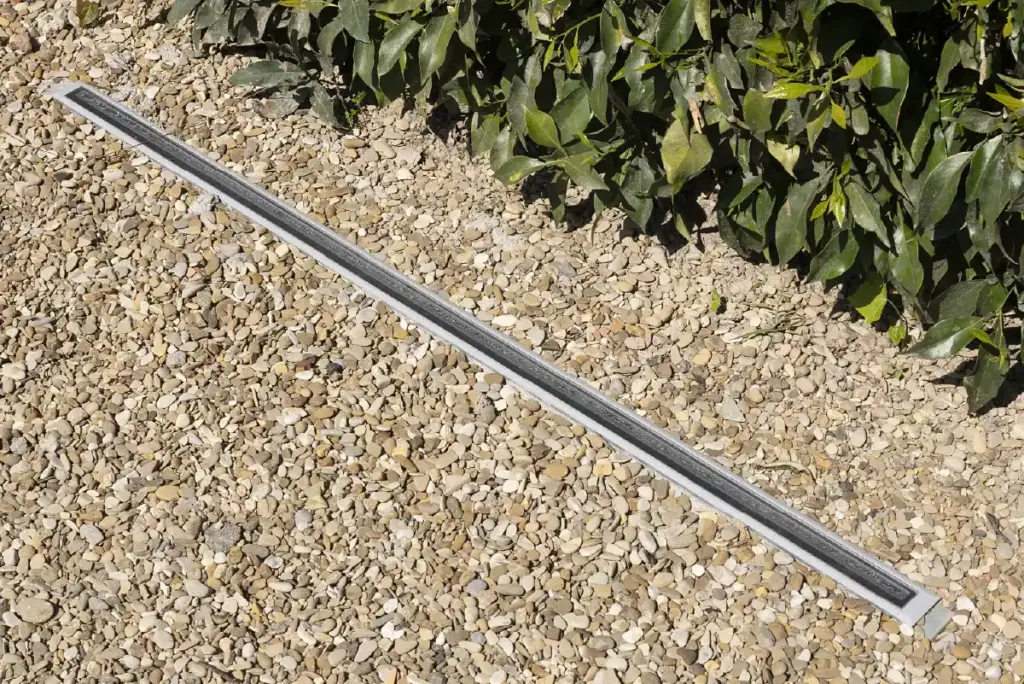
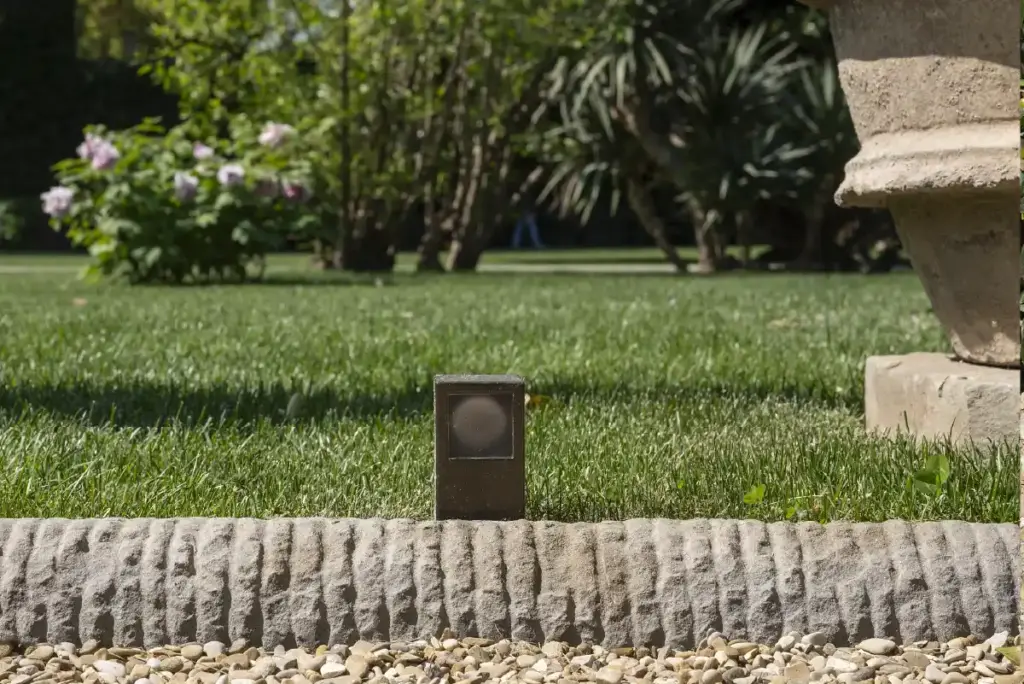
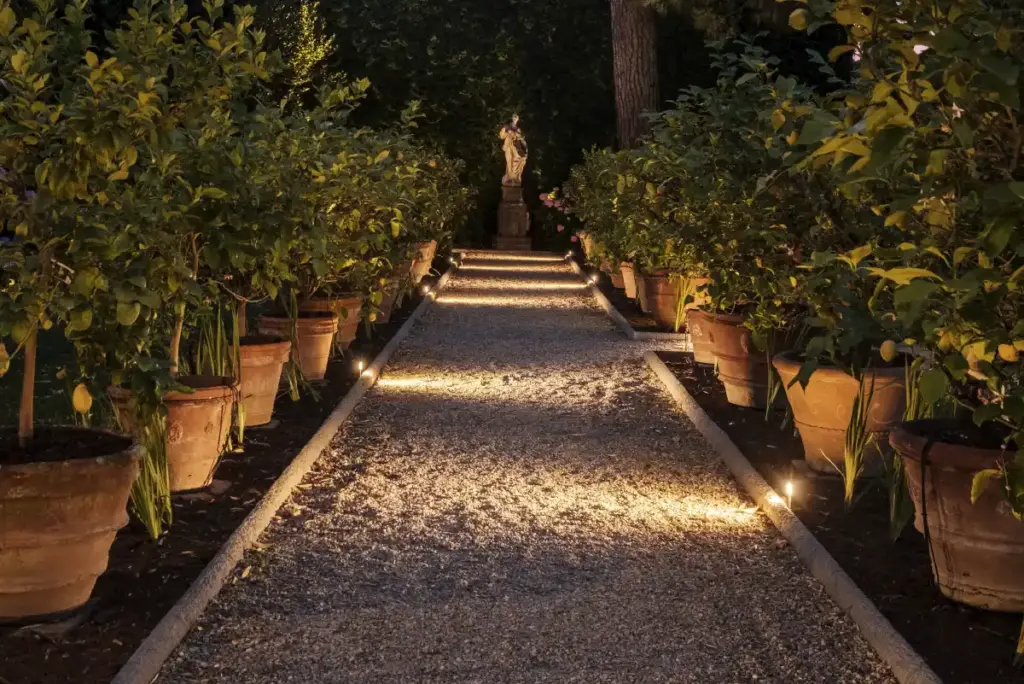
Lighting walkways and paths is among the most important applications in a garden context: it ensures safe footing, visually defines the paths, and contributes to the overall atmosphere. The most common solutions are in-ground bollard lights, positioned at regular intervals along the sides of the path, and recessed path markers integrated into the paving or side banks.
For long or winding walkways, it is preferable to distribute the light points regularly, avoiding excessive shadow zones between one lighting fixture and the next. The height of the bollards greatly influences the final effect: low bollards (30–50 cm) create a very suggestive ground-level effect; taller bollards (80–120 cm) cover larger areas but with a less intimate atmosphere. The choice depends on the width of the walkway and the overall style of the garden.
Design Excellence for Palazzo Pfanner in Lucca
A concrete example of excellence in the garden lighting sector is represented by the collaboration between Atelier Dimensione Verde and ZRlight for the enhancement of the historic garden of Palazzo Pfanner. This project combined landscaping and technological expertise to create a lighting system capable of enhancing the baroque elegance of the garden, highlighting statues, fountains, and plant geometries without altering its original balance. The intervention stands out for its calibrated use of light, designed to enhance architectural details while ensuring discreet and sustainable lighting. The result is a perfect balance between scenographic lighting and respect for the historical context, demonstrating how careful design can transform a garden into a unique visual experience even in the evening hours.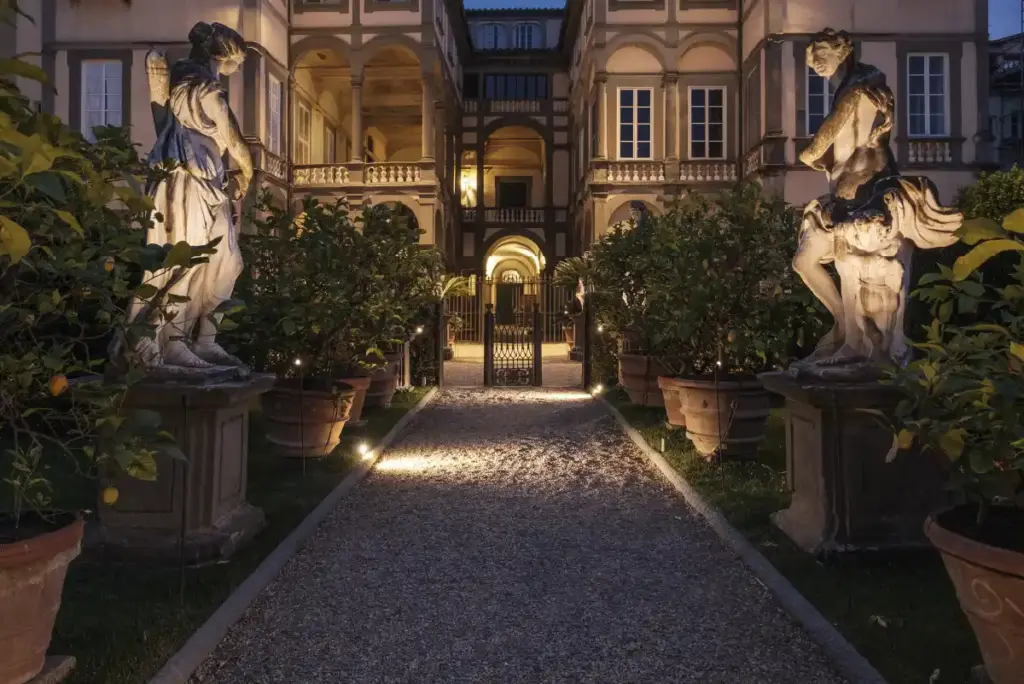
FAQ: Frequently Asked Questions about Garden Lighting
Which lights are best for the garden?
LED lights represent the most efficient choice: low consumption, long lifespan, and a wide range of formats. For those who do not want cables, solar lights are an excellent alternative for walkways and decorative areas.
How to light a garden without electricity?
With solar-powered lights: they are installed without cables, charge during the day, and turn on automatically at sunset. Models exist for every application, from path markers to spotlights.
What is the right color temperature for the garden?
For relaxation areas, warm light (2700–3000K) is ideal; for paths and entrances, a neutral light (3500–4000K) is preferred, as it is sharper and more functional.
Is an electrician necessary for garden lights?
For solar and battery systems, no. For systems wired with underground cables, yes: a qualified professional is required to issue the declaration of system conformity.
What does the IP rating mean in garden lights?
The IP rating indicates resistance to external agents. For general outdoor use, at least IP65 is needed; for underwater applications, IP68 is required.
How to light trees in the garden?
With the uplighting technique: one or more spotlights are positioned at the base of the trunk pointing upwards. For a more natural effect, downlighting from high branches replicates moonlight in a suggestive way.
Can garden lights be left on all night?
Yes, outdoor LEDs are designed for prolonged operation. To optimize consumption and reduce light pollution, it is advisable to pair them with timers or dusk-to-dawn sensors that automatically manage the shutdown time.
Linkography and Further Reading
To learn more about regulations, technical standards, and energy efficiency in the field of outdoor lighting, please refer to the following sources:- CIE – Commission Internationale de l’Éclairage — international lighting standards and regulations: https://cie.co.at
- IES – Illuminating Engineering Society — professional guidelines for lighting engineering: https://www.ies.org
- ENEA – Italian National Agency for New Technologies, Energy and Sustainable Economic Development — energy efficiency and sustainable lighting: https://www.enea.it
- RSE – Ricerca Sistema Energetico — studies and research on lighting efficiency: https://www.rse-web.it
- International Dark-Sky Association — impact of light pollution and best practices: https://www.darksky.org
- UNI – Italian National Unification Body — UNI EN 13201 regulation on street and path lighting: https://www.uni.com
Summary Table: Garden Lighting
| Area / Use | Recommended Technique | Light Type | Color Temperature | Minimum IP Rating | Power Supply |
|---|---|---|---|---|---|
| Paths and walkways | Path marker bollards, side recessed | LED / Solar | 3500–4000K (neutral) | IP65 | Mains / Solar |
| Trees and hedges | Uplighting (ground spotlight upwards) | LED Spotlights | 2700–3000K (warm) | IP65 | Mains electricity |
| Relaxation areas / patio | Downlighting, diffused lights | Dimmable LED | 2700–3000K (warm) | IP44–IP65 | Mains / Solar |
| Ponds and fountains | Underwater / floating lights | IP68 RGB LED | Variable / RGB | IP68 | Mains electricity |
| Modern gardens | Linear LED profiles, recessed spotlights | Smart LED | 3000–4000K (neutral) | IP65 | Mains + Smart |
| Without electrical system | Autonomous solar lights | Solar LED | Variable | IP44–IP65 | Solar |
| Perimeter and security | Continuous lighting + sensors | LED + motion sensor | 4000K (neutral) | IP65 | Mains electricity |
| Decorative scenery | Grazing, backlighting, washing | Adjustable LED spotlights | 2700–3000K (warm) | IP65 | Mains electricity |