


Rose Pruning
The Complete Guide for Extraordinary Blooms
22 February 2026
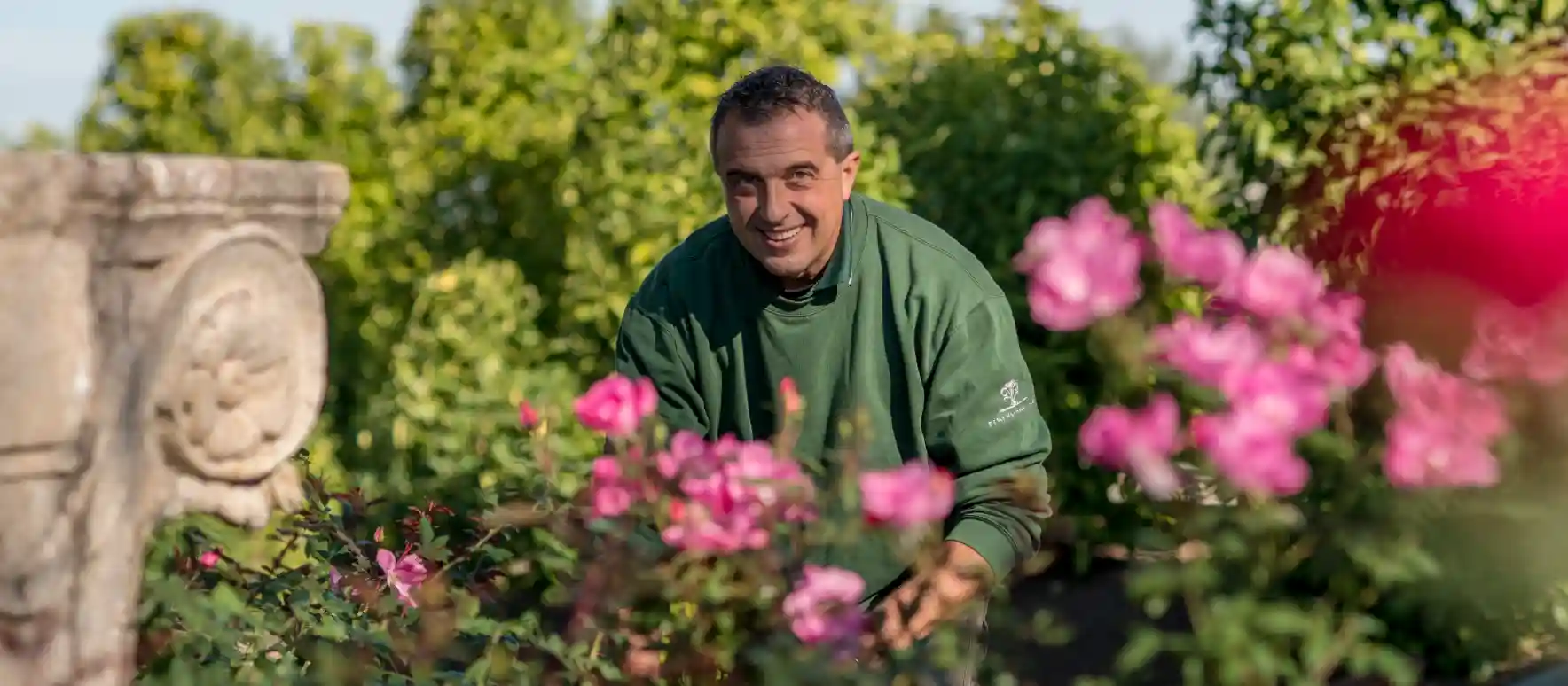
The pruning of roses is the most important intervention for obtaining healthy, vigorous plants rich in flowers. This practice consists of the strategic removal of old, weak, or poorly positioned branches to stimulate the growth of new productive vegetation. Roses mainly bloom on the current year’s shoots, so proper pruning concentrates the plant’s energy on young buds that will produce the most abundant and spectacular blooms.
Many gardeners fear damaging their roses with incorrect interventions, but in reality these plants are extremely resilient and can tolerate even significant mistakes. The real risk is not pruning too much, but pruning too little or not pruning at all. Without regular pruning, roses become messy shrubs with tangled vegetation that produces few small and unimpressive flowers.
When to prune roses: the right timing
The best period for pruning roses is late winter, between February and March in central and northern regions, when the buds begin to swell but have not yet opened. This moment coincides with the spring vegetative awakening, when the plant has accumulated enough energy reserves to respond positively to the intervention.
In areas with harsh winters, it is advisable to wait until the risk of severe frost has passed. Fresh cuts are vulnerable to frost, which can penetrate the tissues and cause drying. On the other hand, in southern and coastal regions with mild climates, pruning can be brought forward to the end of January, taking advantage of milder temperatures that encourage an earlier vegetative recovery.
Summer pruning is practiced on repeat-flowering roses after the first bloom in May–June. By removing faded flowers and shortening the flowering branches, a second wave of buds is stimulated, which will bloom in August–September. This intervention, also called deadheading, keeps the plants aesthetically pleasing and extends the decorative period of the rose garden until autumn.
Climbing roses follow different calendars depending on their ability to rebloom. Varieties that flower only once a year are pruned immediately after the summer flowering, removing the branches that produced flowers. Repeat-flowering climbers, on the other hand, require a light spring pruning and summer interventions after each flowering wave to stimulate new blooms.
How to prune bush roses
Modern bush roses are the most common in gardens and include hybrid tea, floribunda, and grandiflora. The goal of pruning is to create an open structure with three to five strong main branches, eliminating everything else. This cup-shaped form encourages air circulation and light penetration, drastically reducing fungal diseases.
The process begins by completely removing dead branches, recognizable by the dark color of the inner wood and the absence of living buds. These branches will not produce vegetation and may host pathogens, so they should be cut at the base without leaving stubs. Branches damaged by frost or broken by wind should also be removed because they will not recover their vitality.
Old branches that are more than three to four years old can be recognized by their rough, cracked bark. They produce weak growth with few flowers, so they should be removed at the base to rejuvenate the plant. Each year, one or two old branches are removed, gradually renewing the structure without excessively stressing the rose.
The selected main branches are shortened to twenty to thirty centimeters from the base, cutting above a bud facing outward. This short pruning stimulates the growth of vigorous shoots that will produce large and numerous flowers. For cutting roses, pruning can be even more drastic, leaving only fifteen to twenty centimeters with two or three buds.
Thin branches with a diameter smaller than a pencil should be removed because they will produce only weak vegetation incapable of supporting quality flowers. Always favor strong branches that are well lignified and bright green in color. Branches that grow inward should be cut to keep the center open and airy.
Pruning Climbing Roses
Climbing roses require techniques completely different from bush roses. The fundamental distinction is between once-flowering varieties and repeat-flowering varieties, which have opposite needs in order to maximize flower production.
Non-repeat-flowering climbers, such as ramblers, bloom on the previous year’s branches. They should be pruned immediately after the summer flowering, completely removing the branches that produced flowers and keeping the new shoots produced during the summer.
Repeat-flowering climbers, such as climbers, require two pruning interventions each year. In March, the lateral shoots are shortened to three or four buds from the main branch, which forms the permanent framework of the plant. These short shoots will produce the first flowering. After this, the flowered branches are cut back to stimulate new vegetation that will bloom again in autumn.
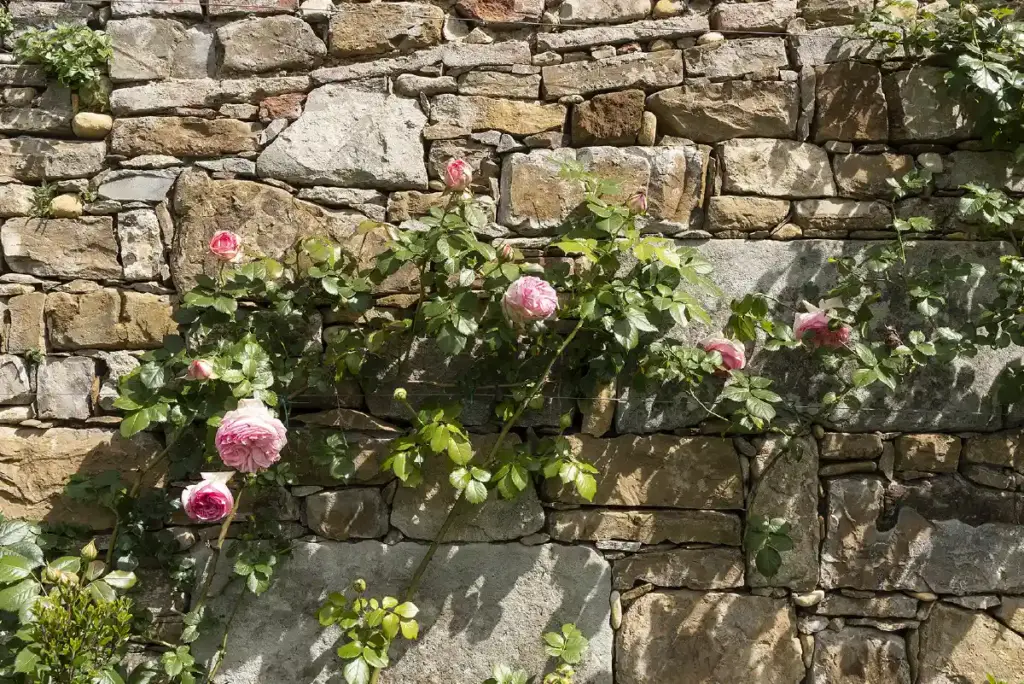
The tying of the branches is just as important as pruning. Branches should be tied in an arch shape: this way they produce flowering shoots along their entire length, while branches left to grow vertically will vegetate only at the tip with few flowers. In fact, bending the branch into an arch slows the flow of sap, encouraging the production of new flowering shoots. This difference can multiply the number of flowering points tenfold, turning a mediocre climbing rose into an extraordinary display.
The rejuvenation of old climbing roses involves gradually removing one third of the oldest main branches each year for three years. The younger branches that will replace those removed are preserved, completely renewing the plant without compromising its flowering.
The Perfect Cutting Technique
The precision of the cut determines the future health of the rose. The cut should be made about one centimeter above a well-formed bud, with a forty-five-degree angle. This inclination prevents rainwater from pooling on the surface, avoiding rot and fungal infections that could compromise the bud underneath.
The chosen bud should face outward from the plant. The shoot will grow in the direction of the bud, so systematically selecting outward-facing buds results in an open and airy crown. Internal buds would produce branches that grow toward the center, creating tangled growth that favors disease.
Well-sharpened tools are essential for clean cuts that heal quickly. Dull scissors crush the tissue, producing irregular wounds that take weeks to heal and provide ample entry points for pathogens. Blades should be professionally sharpened at least once a year before the pruning season.
Disinfecting tools between plants prevents the transmission of diseases throughout the rose garden. Use 70% alcohol or diluted bleach, quickly wiping the blades with a soaked cloth. This process takes only a few seconds but can prevent devastating outbreaks of bacterial cankers or pathogenic fungi.
Tools Needed for Pruning Roses
The main tool for pruning roses is one-handed pruning shears, suitable for branches up to 2–2.5 centimeters in diameter. Bypass models, with blades that slide past each other like regular scissors, produce cleaner cuts than anvil models and are preferable for live wood.
Two-handed loppers extend cutting capacity to branches 3–4 centimeters thick, using long handles to multiply force. They are essential for older roses with robust basal branches. Telescopic models allow access to high branches up to three meters without a ladder, useful for climbing roses.
A pruning saw is used for branches over 4 centimeters or in tight spots where loppers cannot reach. Models with curved blades and teeth designed for green wood cut quickly without jamming.
Thick leather pruning gloves are also often essential to protect hands from the robust, sharp thorns of roses.
Pruning Old Roses
Old roses require respect and conservative interventions. The vast majority of Gallica, Damascena, Centifolia, Moss, and Alba roses bloom only once on the previous year’s branches, so drastic pruning would completely eliminate the season’s flowering.
These roses require minimal pruning, limited to the removal of dead or diseased branches and light thinning after flowering to maintain an orderly shape. Rustic varieties tend to spread by producing root suckers, a natural characteristic that should be encouraged rather than suppressed.
Noisette roses, often used as small climbers, rebloom and tolerate more substantial pruning. At the end of winter, the main branches are shortened by one third, and lateral shoots reduced to three or four buds. After the first bloom, faded flowers are removed to stimulate autumn reblooming.
English roses, selected by David Austin, are modern repeat-flowering roses that retain the beauty of graceful, balanced growth and old rose flowers. They can be pruned in the same period as modern roses but do not require drastic cuts.
Care After Pruning
Immediately after pruning, it is necessary to feed roses with an organic fertilizer, taking care to bury the product without placing it in contact with the plant’s collar. Organic fertilizers release nutrients gradually, adequately supporting plant growth while preventing overly vigorous vegetation that would be more susceptible to fungal and animal pathogens.
Rose-specific fertilizers are often mixed organic fertilizers, containing both organic (slow-release) and mineral components (immediate nutrient supply). They provide balanced proportions of nitrogen for growth, phosphorus for flowering, and potassium to strengthen the tissues.
Fertilization is repeated after the first flowering to support reblooming in modern varieties that flower repeatedly until autumn.
Mulching with five to seven centimeters of bark or compost maintains soil moisture, limits weeds, and protects surface roots from temperature fluctuations. Preventive treatments with copper-based products disinfect fresh cuts, preventing fungal infections during the critical days after pruning.
Common Mistakes to Avoid
Pruning too early in mid-winter exposes tissues to damaging frost. It is always better to wait until the risk of severe cold has passed, even if it slightly delays vegetative recovery. Using dull tools produces irregular cuts that heal slowly, providing entry points for pathogens.
Leaving stubs after cutting creates dead tissue that becomes a refuge for insects and fungi. Stubs should be avoided by cutting precisely above a bud or flush with the base. Pruning too lightly stimulates weak growth incapable of producing quality flowers, while modern roses respond positively to drastic pruning.
Failing to disinfect tools spreads diseases throughout the rose garden. A quick wipe with alcohol between plants prevents potentially devastating contamination. These simple precautions transform pruning from a risky operation into a guarantee of extraordinary blooms throughout the season.
Who to Turn to for Perfect Rose Gardens
When it comes to rose pruning in Florence, local experience makes the difference. Working on rose gardens in a historical, climatic, and landscape context like Florence requires cross-disciplinary expertise: knowledge of rose varieties best suited to the Tuscan climate, mastery of pruning techniques specific to old and modern roses, respect for seasonal timing linked to Florence’s hill temperatures, and the ability to operate while preserving plant health and the aesthetics of historic gardens.
Firenze Atelier Dimensione Verde is a reference point for those seeking technical expertise, recognized certifications, and extensive experience in the management and pruning of ornamental roses.
The Florentine company stands out for its professional approach, its ability to interpret the specific needs of each rose variety, and the execution of targeted interventions designed to ensure abundant flowering and enhance floral heritage—from private gardens to historic villa rose gardens and public parks. For those seeking rose pruning that combines effectiveness, respect for plant physiology, and preservation of Florentine garden aesthetics, relying on specialists like Atelier Dimensione Verde is an investment in technically excellent results, aligned with best agronomic practices and respectful of the health and longevity of roses.